







WeChat ID :


Login/Register


 Posted on 20 Oct 2026
 33


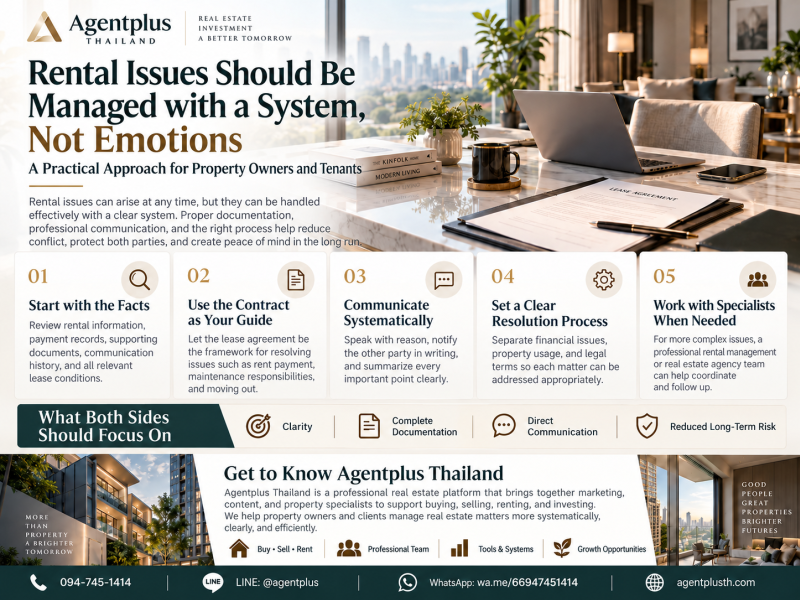
Late rent, property damage and disagreements over a deposit can quickly turn a tenancy into a dispute. When the parties react before checking the facts, a manageable problem may become more difficult to resolve.
A better starting point is to ask: What happened, who is affected, what evidence is available, and what action is appropriate? A clear process helps landlords, tenants and rental agents communicate using the same information.
Not every issue calls for termination of the lease. A broken air conditioner may need a service response, while unpaid rent or unauthorized alterations may require a review of the agreement. A safety emergency needs immediate attention before other matters.
Separate problems into safety, repairs, contractual issues, and damage or deposit questions. This helps avoid treating every complaint as a dispute.
Evidence collection should never delay necessary emergency assistance.
Before contacting a tenant about unpaid rent, confirm the due date, payments received and outstanding balance. A transfer may have been made without the receipt being shared, or the parties may disagree about a charge.
If a payment arrangement is agreed, record it in writing. Include the balance, instalments, payment dates, current rent obligations and what happens if the arrangement is not followed. Check whether any guarantor must also participate.
Avoid undocumented cash payments, open-ended extensions and statements that all matters are settled before the full account has been reviewed.
Repair requests should have a record, a responsible person and a follow-up date. Investigate the cause before deciding who bears the cost, and agree on access for inspections or contractors.
For damage claims, distinguish actual damage from ordinary wear and tear. Compare the condition with move-in records and consider the item’s age and previous condition. Charging the full cost of a new replacement should not be automatic, particularly where replacement improves the property beyond its previous state.
Any proposed deposit deduction should be itemized and supported by relevant evidence, subject to the agreement and applicable law.
Review the lease, payment history and available contact information before drawing conclusions. Do not use utility disconnection, lock changes, removal of belongings or public accusations to pressure a tenant.
Emergency access and routine access are different situations. Where possession or termination is disputed, obtain advice about the proper legal process.
An agent can help organize documents, record complaints, coordinate inspections and track responses within the agreed service scope. Legal decisions concerning termination, possession or liability should be referred to qualified professionals.
Suggested company description: “Agentplus Thailand provides real estate brokerage and consulting services, with an emphasis on clear rental coordination and organized transaction information.”
A system cannot prevent every disagreement, but it can make the next step clearer. Reliable records and calm communication give both parties a stronger basis for resolution.