







WeChat ID :


Login/Register


 Posted on 4 Nov 2026
 2


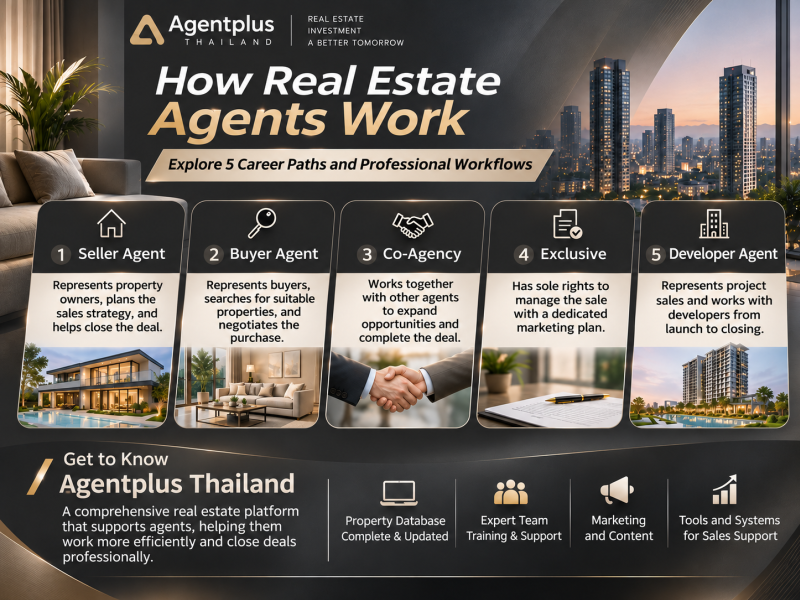
Real estate agents do more than arrange viewings and collect commission. Their work can include property sourcing, market analysis, marketing, client matching, negotiation, transaction coordination and after-sales support within the agreed scope.
For someone entering the profession, choosing a working model affects independence, expenses, available support and long-term career development.
| Model | Main characteristics | Key consideration |
|---|---|---|
| Independent / Freelance | Manages clients, listings, marketing and time independently | Must organize costs, systems and client acquisition |
| Agency-Based | Works with a company’s team and tools | Must follow company rules and remuneration agreements |
| Developer Sales | Focuses on new projects from a developer | Property choices are limited to the assigned projects |
| Co-Agent / Referral | Cooperates with agents who have listings or buyers | Roles, referral evidence and fee allocation need clarity |
| Platform / Network Agent | Uses databases, CRM and a supporting network | Access, membership and platform conditions should be reviewed |
No model is best for everyone. The appropriate choice depends on resources, sales skills, desired support and career goals.
An agent’s organizational model does not determine the owner’s appointment terms.
Common listing arrangements include Open Listing, Exclusive Agency and Exclusive Right to Sell. Their labels should not replace a review of the actual contract. The agreement needs to address duration, authority, marketing, remuneration and what happens if a buyer comes through another channel.
Agents may also specialize in residential property, leasing, new developments, luxury, commercial property or investment-related transactions.
A listing workflow can follow information → authority → inspection → agreement → publication → follow-up.
Before advertising, confirm the property details and the authority to market it. Do not publish false information or conceal known material defects.
The client funnel follows New Lead → Qualify → Match → Viewing → Follow-Up. Understanding budget, purpose and timing helps an agent select relevant properties instead of sending an unfiltered list.
Before a viewing, confirm the appointment and property status. During it, provide accurate information. Afterwards, record the client’s interests, concerns and next steps in the CRM.
A sales process can move through qualification, viewing, offer, agreement, title and financing checks, transfer and after-sales care.
Agreeing a price is not the same as completing a transaction. Documents, conditions and the readiness of both parties still need coordination. Legal and financing questions should be referred to the appropriate professionals.
Remuneration may include sales commission, rental fees or an agency or co-agent split. Agree on the calculation, allocation, cancellation arrangements and tax documentation before work progresses.
A commission figure such as 3% is an illustration of a possible agreement—not a mandatory rate or an earnings guarantee.
Professional practice also requires confidentiality, accurate information and appropriate handling of client funds. An adviser knows when to explain, when to verify and when to refer a question.
Agentplus presents a platform approach connecting property information, CRM, membership systems and leads to support searching, screening, appointments and transaction follow-up.
Suggested company description: “Agentplus Thailand supports real estate agents through property databases, CRM and network tools that help organize information, match client needs and track work.”
The value of a platform depends on how it is used and its actual conditions. Access to tools does not guarantee leads, earnings or completed transactions.